
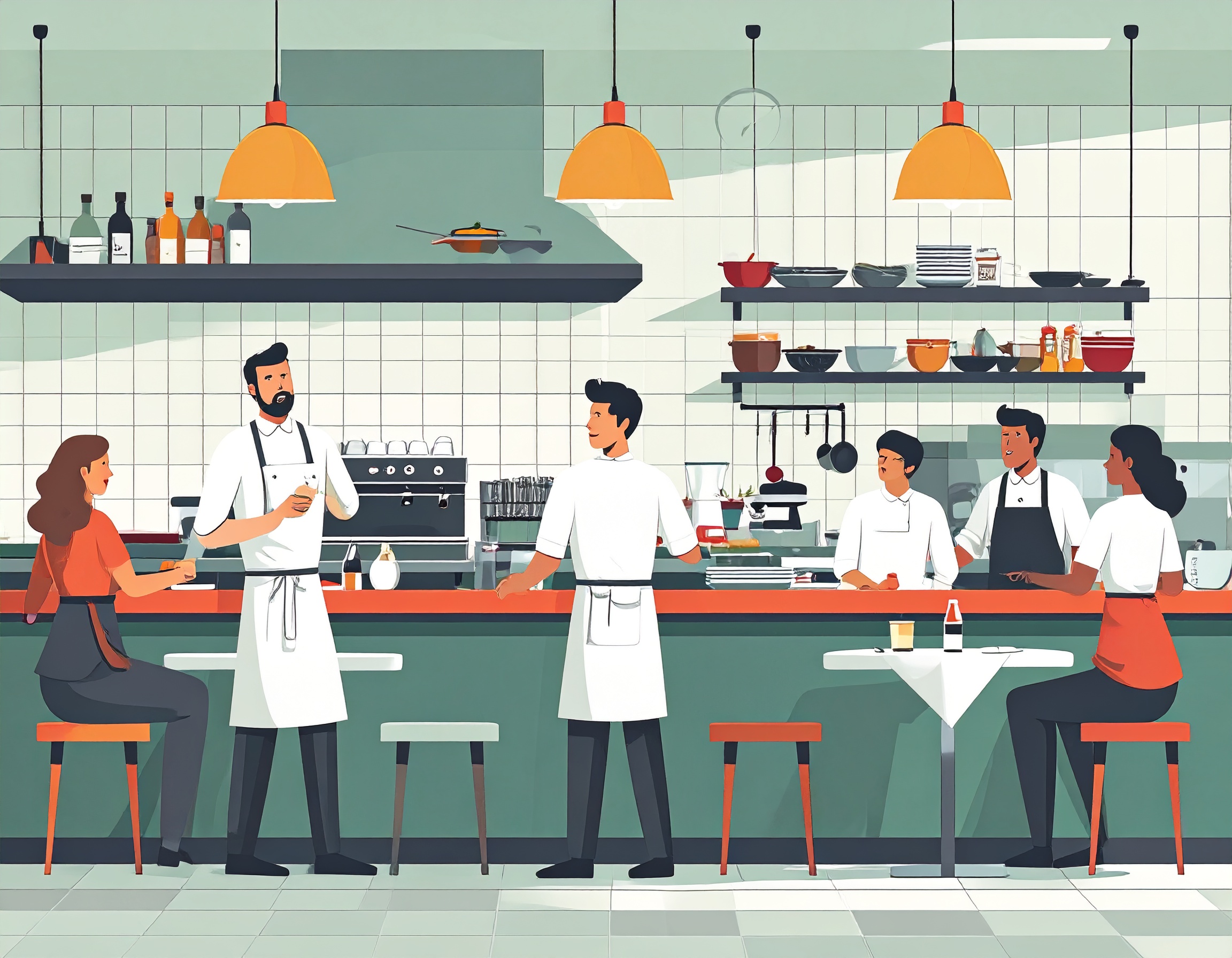
The dish may be perfectly prepared in the kitchen, the waiter may be trying his best, but if the customer doesn't know about it, nothing matters.
The perception of waiting is more powerful than the actual waiting.
The paradox of time in the restaurant
Behavioral psychology studies show that waiting without information seems 36% longer than expect with transparency (Journal of Consumer Psychology, 2019). In the context of restaurants, this translates into:
Customer waiting 15 minutes no information: It looks like half an hour
Customer waiting 15 minutes knowing that the dish is being prepared: It seems acceptable
The difference is not in real time. control perceived.
What really annoys the client
It's not waiting for you.
Uncertainty
"My request was forgotten? Did the waiter write it down wrong? How long will it take?"
Lack of control
"I can't do anything but sit here waiting, and I don't even know if it's worth complaining about."
Breaked expectations
"I thought it would be quick, 20 minutes ago, no one told me it would take."
These three factors create silent anxiety — the customer does not complain at the time, but:
He's not coming back.
Leaves negative review
Count to 9 people on average about the bad experience
The invisible cost of customer anxiety
Sector data show that:
70% of customers who had bad experience with waiting do not return (Sebrae Food Service, 2023)
Every lost customer represented R$ 2,400/year in potential billing (mean of 2 visits/month x average ticket R$ 100)
Negative reviews reduce 13% of future reserves (TripAdvisor Impact Report)
In São Paulo, where competition is 200 meters away, losing a client for waiting anxiety is unacceptable.
How our system solves the psychology of waiting
The platform Chiefs attacks the three pillars of frustration:
1. Total transparency - eliminating uncertainty
Traditional system:
Client asks, "How long is it?"
Waiter answers, "It's already coming out" (without knowing if it's true)
Customer is still anxious
With Chefs:
Kitchen display shows real-time status: Pending → Preparing → Ready → Delivery
Waiter can consult the app and answer with PRECISE: "Your dish is being finished, 3 minutes"
Client relax because you have specific information
2. Control perceived - reducing anxiety
Functionality: Autocustomer service via tablet
When the customer can:
View the digital menu with photos
Make direct tablet orders on the table
Follow application status
Call the waiter when you need it (digital button)
The feeling of control increases 64% (Nielsen Norman Group - UX Research, 2022).
It's not that the dish comes faster — it's that the customer Feels like you're in charge..
3. Lined expectations - avoiding disappointment
At the time of application:
System can show estimated preparation time (based on historical data)
Customer already knows: "This dish takes 25 minutes" BEFORE he asks
No negative surprise
During waiting:
Real-time updates
If there is delay, waiter is automatically notified and can proactively notify
Customer does not feel forgotten
The impact on the customer experience
Real scenario: Table with 4 people, 4 different dishes
BEFORE (traditional system):
Waiter notes everything (5 minutes)
Take command to kitchen (2 minutes)
Kitchen deciphers waiter's letter (3 minutes)
Start preparing (15 minutes)
Waiter looking for dishes, find out one is missing (2 minutes)
Return to the kitchen, confirm (3 minutes)
Wait for the plate that's missing (8 minutes)
Deliver everything together (2 minutes)
Total time perceived by the customer: 40 minutes of uncertainty
LATER (with Chiefs):
Customer places order on tablet OR waiter registers in app (2 minutes)
Kitchen receives instantly with clear identification: Table 12-A, 12-B, 12-C, 12-D (0 minutes waiting)
Customer sees on the tablet: "Your request has been confirmed, estimated time: 18 minutes"
Kitchen prepares with total clarity (15 minutes)
System notification waiter: "Mess 12 - ready dishes" (0 seconds)
Waiter delivery (2 minutes)
Customer confirms on tablet: "I received my order" (avoid confusion)
Total time perceived: 17 minutes with TRANSPARENCY
The difference is not just speed — it is FEELINGS.
Actual implementation data
Restaurants that implemented the Chefs system in São Paulo reported:
42% reduction in complaints about waiting time
31% increase in positive reviews mentioning "customer service agile"
Return rate 28% higher (clients come back because they trust the process)
Round tables 35% faster (less time lost with uncertainties)
Why this is decisive for São Paulo
In a city where:
Time is the scarcest resource customer
Competition is at a corner distance
Online reviews define reputation within 24 hours
The ability to manage expectations and reduce anxiety is not differential — is survival issue.
The Cascade Effect of Confidence
When the customer trusts that:
Your request was registered correctly
The kitchen knows exactly what he asked for.
The waiting time is reasonable and transparent
He can call the waiter when he needs to.
He's the one relax, enjoy the company, ask for more (over lunch, extra drink, coffee).
Average ticket increases Not because you sold more — but because removed the friction from the experience.
Conclusion
Technology does not replace good food or human customer service. removes invisible obstacles That prevent the client from taking advantage of both.
While most restaurants try to "accelerate the kitchen" or "train faster waiters", the winners understand that the problem is not speed — it is perception, transparency and control.
Our platform Chiefs turns anxiety into trust, uncertainty into clarity, and frustrated customers into prosecutors of your restaurant.
In the next chapter: As the autocustomer service releases the team to create memorable experiences (rather than just write down requests).
You want to see how it works in practice? Let's talk.